English Հայերեն Русский

5 places to have a picnic in Dilijan

A picnic in Dilijan is rarely just a picnic. It is usually lunch, a forest walk, a slightly overambitious bag of food and someone saying, “Let’s go just a little farther,” before the road turns into a proper hike.

The good news: Dilijan is very forgiving. You can spread a blanket near a lake, find a quiet clearing after a short walk, or build your whole day around khorovats, fresh bread, fruit and the noble Armenian tradition of packing enough food for twelve people when there are only three of you.

Here are a few good options, from easy and social to properly foresty.

1. Lake Parz: the classic choice for a no-stress picnic

Lake Parz is the obvious answer – and for once, obvious is not a bad thing. This small lake in Dilijan National Park is surrounded by forest, has walking paths, places to sit, cafés in season and activities such as boat rental. In other words: it is ideal for people who want nature but would also like access to coffee and a toilet. A revolutionary combination.

2. Gosh Lake: for people willing to earn their lunch

If Lake Parz is the easy-going cousin, Gosh Lake is the friend who says, “It’s not far,” and technically means it – but forgets to mention the uphill part.

The lake lies near Gosh village and is reached by a forest hike. The route is beautiful, green and peaceful, and there are picnic areas near the shore. This is a wonderful choice for a small group that likes walking and does not mind carrying lunch in a backpack rather than arriving beside it by car.

Once you get there, the setting feels more secluded than Lake Parz: water, trees, mountain air and the very satisfying feeling that your cheese sandwich has been morally upgraded by physical effort.

3. The pine grove above town: the easy local escape

You do not always need a lake or a heroic trail. Above Dilijan, there are forest roads, pine groves and simple open spots where a short drive or walk can lead to a very convincing afternoon outdoors.

This is the option for a slow picnic: buy lavash, local cheese, tomatoes, greens, fruit and something from a bakery in town, bring a blanket, then find a legal, established recreation spot rather than stepping deep into the forest at random. The best picnics here are usually the least theatrical ones – no schedule, no playlist battle, just the smell of pine needles and a thermos of coffee.

It also works beautifully for families with children, people travelling with older relatives or anyone whose relationship with hiking is mostly emotional.

4. On the Parz–Gosh trail: picnic with a view, not a crowd

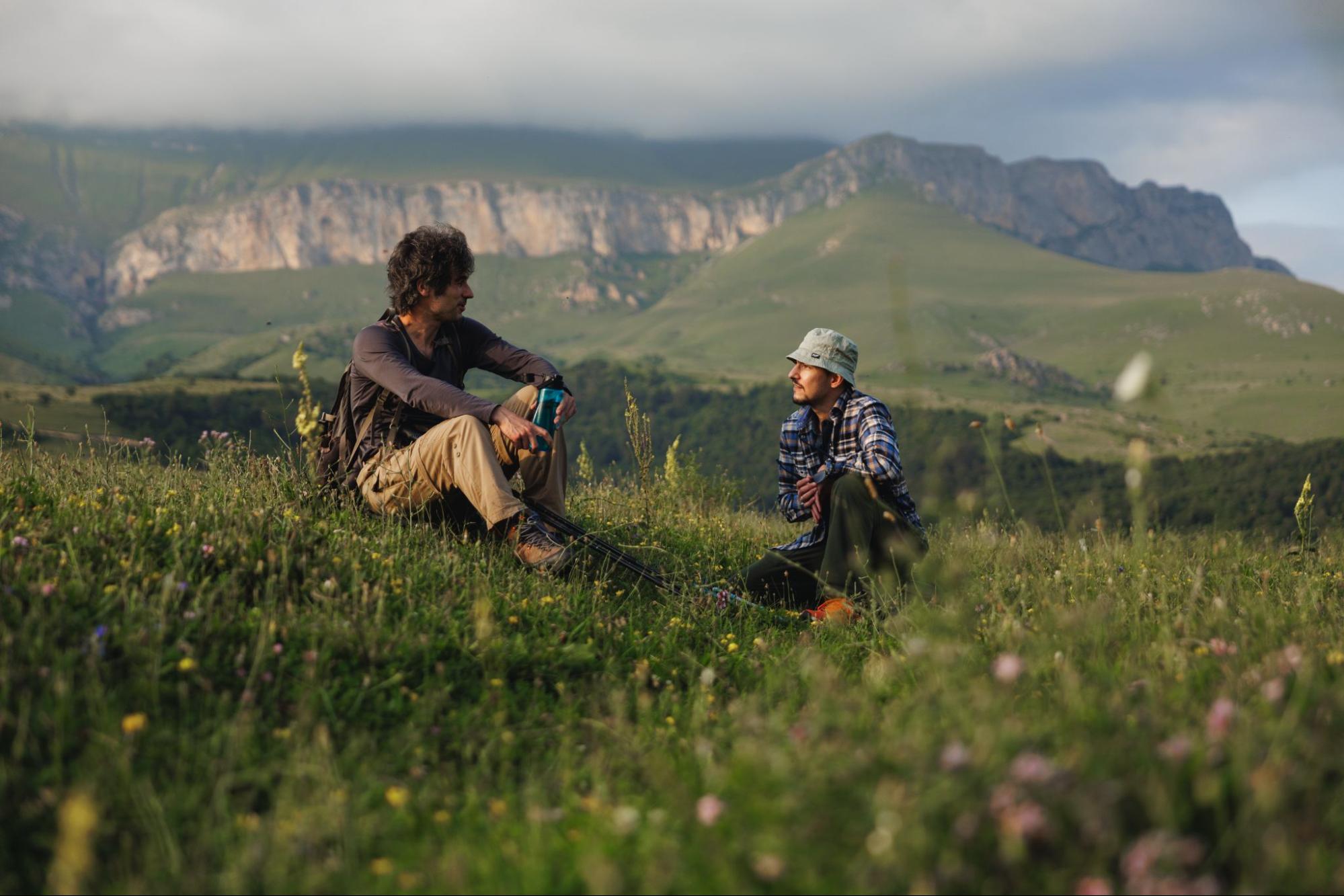
For hikers, the trail between Lake Parz and Gosh village offers a more adventurous picnic format. Parts of the route open onto clearings and viewpoints where you can stop for a packed lunch with forest-covered slopes around you.

This is not a “set up a feast and stay all day” kind of place. Think of it as a walking picnic: bread, nuts, dried fruit, chocolate, sandwiches and a flask of tea. The reward is simple – no restaurant soundtrack, no car doors slamming, just the feeling that Dilijan has briefly become your private green room.

Good to know: download an offline map, start early and take your rubbish back with you. A picnic is charming, a plastic bag caught in a tree is not.

5. A small picnic rulebook for Dilijan

A good Dilijan picnic needs very little: food you actually want to eat, layers for cool weather, drinking water, a rubbish bag and an honest estimate of how far you are ready to walk after lunch.

And one more thing: forests, lakeshores and monastery surroundings are not outdoor restaurants with invisible staff. Leave the place cleaner than you found it, keep music low, do not disturb wildlife and save the dramatic “we must live in nature forever” speech until you are safely back in town with Wi-Fi.

In Dilijan, the main ingredient is already there: a landscape that makes even a modest cheese-and-lavash lunch feel like a scene from a film.
9 ideas where to go with children in Dilijan

Dilijan has space: forest, water, room to run, things to touch and stories that do not need a screen to be interesting. The best family days here are about picking one outdoorsy adventure, adding a warm drink or a pastry, and leaving enough time for the child to investigate a mysterious stick. That is the real Dilijan itinerary.

  1. Dilijan City Park is an easy start for everyone

If you need a low-effort afternoon without leaving town, begin in Dilijan City Park. There is a lake, walking paths, open space, catamarans, a basketball court and the VereV rope park, plus cafés nearby for the moment when everyone suddenly becomes hungry.

It is a good first stop after a long drive or for a day when the adults would also like to sit down occasionally. The park is used by local families, which gives it a much more relaxed feeling than a polished tourist attraction. You can take photos with the Mimino monument, rent a bike through the tourist information centre, or simply let the children burn off the energy they somehow still have after a car journey.

  1. Lake Parz: boats, forest and a very good excuse for a picnic

Lake Parz is the most reliable answer to the question: “Where can we take the children for a few hours without anyone getting bored?” Around 20-25 minutes by car from Dilijan, this small forest lake has boats and catamarans, a rope park, a zipline over the water, playground space and picnic areas. Swimming is not allowed, but boating usually provides enough drama anyway.

For smaller children, the main attraction is simply the lake itself: ducks, reflections, snacks in the forest and the important work of collecting exactly seventeen cones. Older children can add the active options, depending on the season and operator conditions.

  1. The Red Deer Breeding Centre: meet the forest’s VIP residents

On the route towards Lake Parz, make time for the Caucasian red deer breeding centre. This is not a petting zoo with an unfortunate rabbit in a corner. It is part of a conservation programme working to restore red deer to Armenia’s forests, which makes the visit more meaningful than a quick animal photo.

Children can see the deer from the visitor area and hear why some animals live in the centre while others are prepared for life in the wild. It is a quiet stop, but often one that stays in a child’s memory much longer than a loud attraction.

  1. Haghartsin and the Hidden Waterfall: a quest with a pastry at the end

Haghartsin Monastery is beautiful enough for adults and mysterious enough for children: old stone churches, forest all around, carved crosses and the pleasing feeling that a medieval story could begin at any moment.

Families with children who are comfortable walking can continue to the Hidden Waterfall trail. The route is 1.6 km one way from the monastery, but the last section includes rocks and stepping stones, so it is not a pushchair route and is best avoided after heavy rain. For young explorers, though, it feels like a proper mission rather than another cultural stop.

  1. Pottery at Dilijan Eco Station

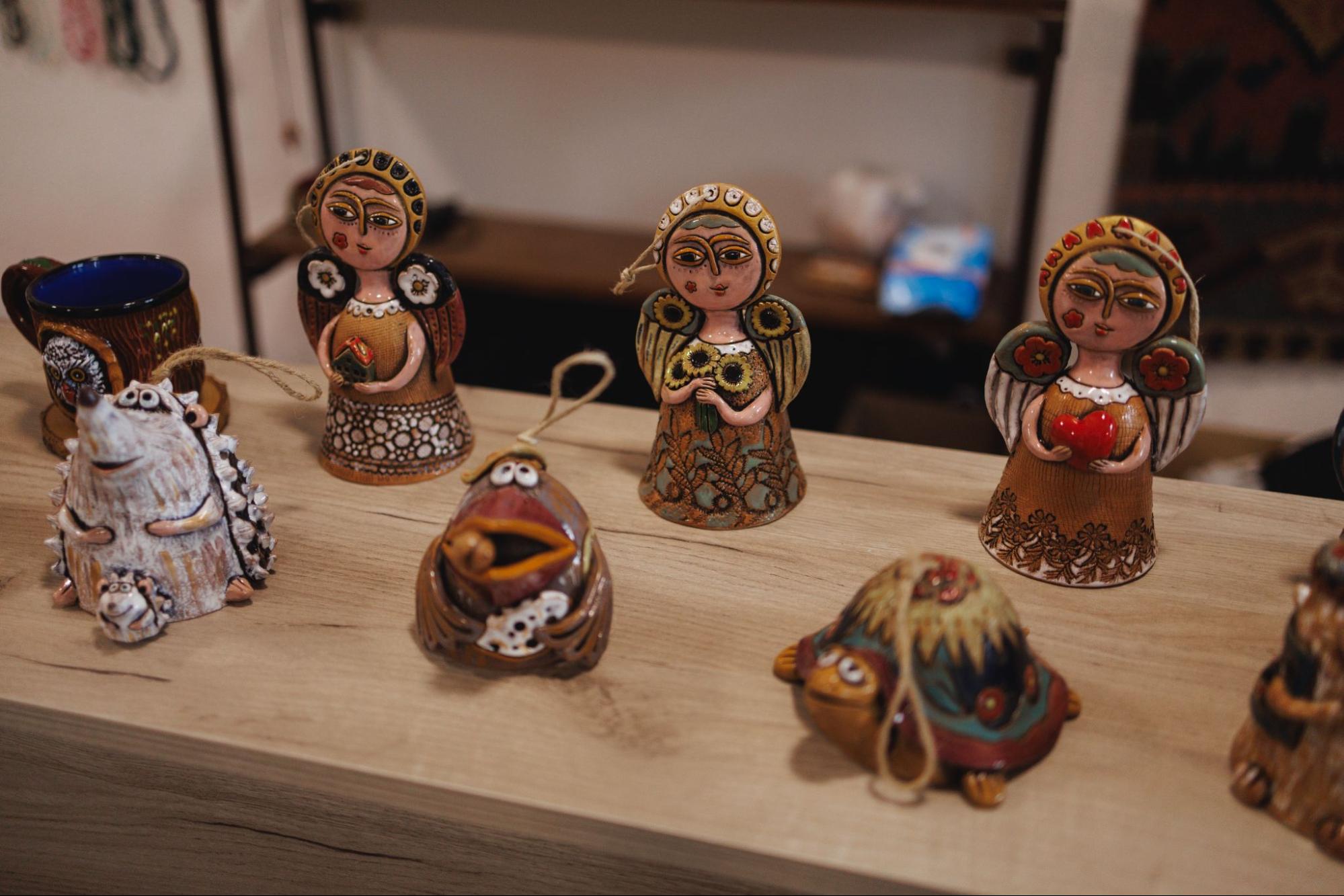
Instead of buying another magnet that will spend the rest of its life on a fridge, let children make something of their own. Fatato Pottery runs clay workshops at Dilijan Eco Station, where young visitors can shape, press, roll and decorate a small piece by hand. The session lasts around an hour and a half – long enough to feel properly creative, but not so long that anyone begins negotiating for snacks. The finished work is fired afterwards, so it becomes a real keepsake from the trip rather than just a rainy-day distraction.

Practical note: book in advance and check the current schedule, age guidance and collection or delivery options for the finished piece.

  1. Old Dilijan: find the people who still make things by hand

Sharambeyan Street, known as Old Dilijan, works particularly well on a rainy day or when everyone needs a slower pace. Yes, it is photogenic. But more importantly, it is a place to show children that bowls, carved letters and jewellery do not appear by magic in souvenir shops.

Look into the working studios, watch craftspeople at their benches and let your child choose one small object with a story behind it. The woodcarving and pottery workshops are especially good for a short, curious visit.

  1. The Dilijan Museum: a rainy-day time machine

The Dilijan Museum of Regional Studies and Art Gallery is not huge, and that is exactly its strength for families. You can spend an hour here rather than attempting a three-hour cultural marathon that ends in mutiny.

Its archaeology, local-history and art collections give children plenty of things to spot: coins, old objects, unusual tools, paintings and evidence that people in Dilijan were living interesting lives long before nowadays. Turn it into a game: each person chooses one object they would take home if the museum somehow offered a very strange “one item free” day.

  1. Yell Extreme Park: for children who hear “zipline” and become instantly alert

For older children and teenagers, Yell Extreme Park in Yenokavan is worth a separate outing. It is outside Dilijan, so treat it as a half-day or full-day adventure rather than a quick stop between lunch and dinner. The park offers zipline flights, off-road trips, horseback riding and other active options in the Tavush mountains.

This is the choice for families whose idea of a good holiday includes a little adrenaline and a child saying, “Can we do that again?” before the harness is fully removed.

  1. A pool day at Dilijan Inn: for children who spot water before they spot mountains

Some children see Dilijan’s forests and think, “Lovely.” Others see a swimming pool and suddenly develop the energy of an Olympic finalist. For them, Dilijan Inn offers a heated outdoor pool with views over the gorge – a very civilised break between hikes, monasteries and the fifth family discussion about whether anyone really needs another pastry. Non-residents can book a day visit in advance, so it can work as a stand-alone activity rather than an excuse to change hotels.

Practical note: the pool is 1.5 metres deep, so children who are not confident swimmers will need close adult supervision. Reserve ahead and confirm the current day-package price, availability and any age rules before going.

Dilijan works best with children when you do not try to turn it into a race. Let the day have one main adventure, one excellent pastry and enough unplanned time for puddles, pinecones and spontaneous questions about medieval monks. The forest will do the rest.

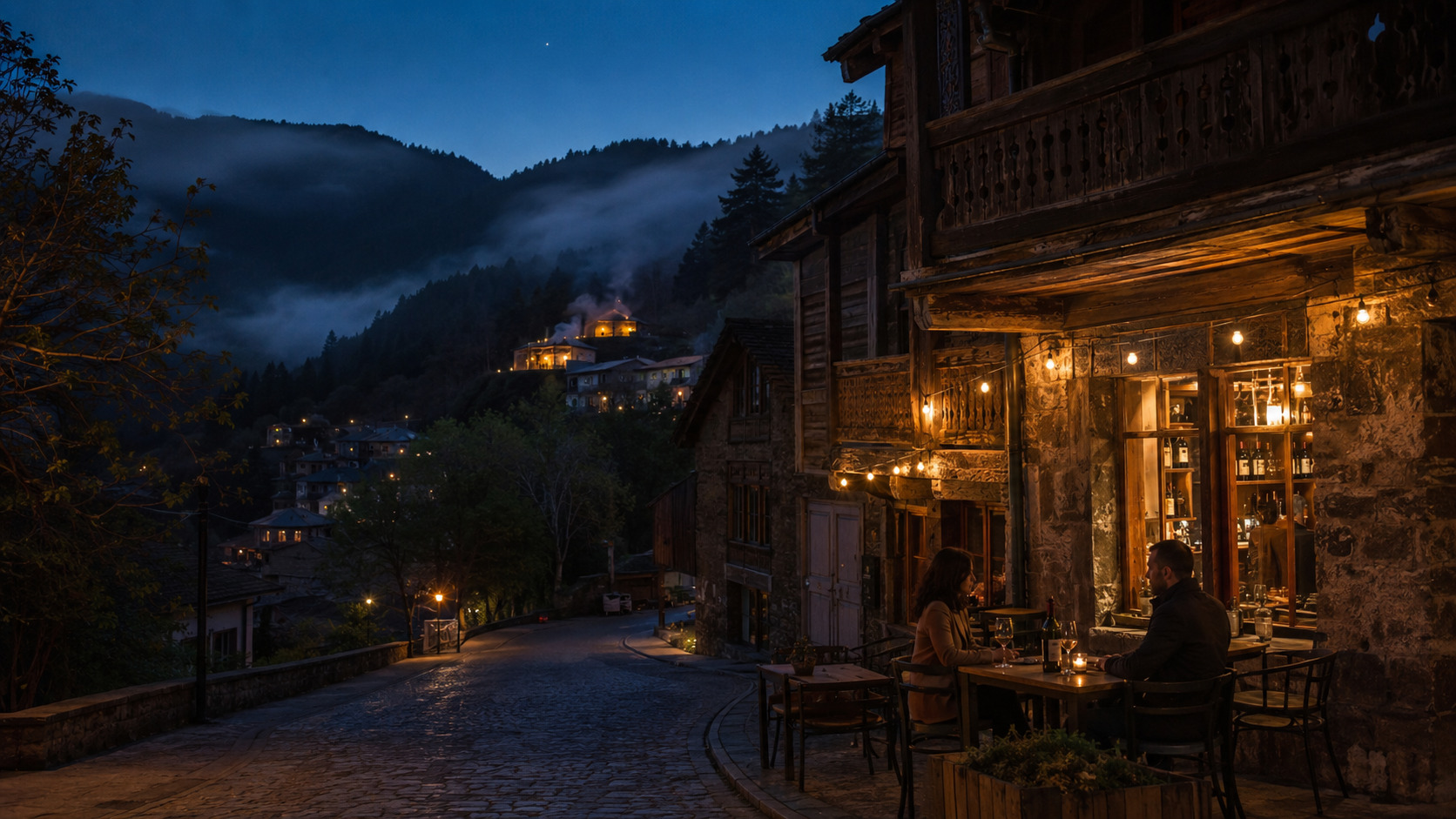
Where to drink wine in Dilijan: a small town guide to a very good evening

Dilijan is known for forests, monasteries and people telling you that the water is excellent. All true. But after a day of hiking, driving up winding roads or politely pretending that you can identify every mountain peak, water may no longer feel like the most exciting option.

This is when Dilijan becomes unexpectedly good at wine.

The Kliver wine place: for a proper wine evening

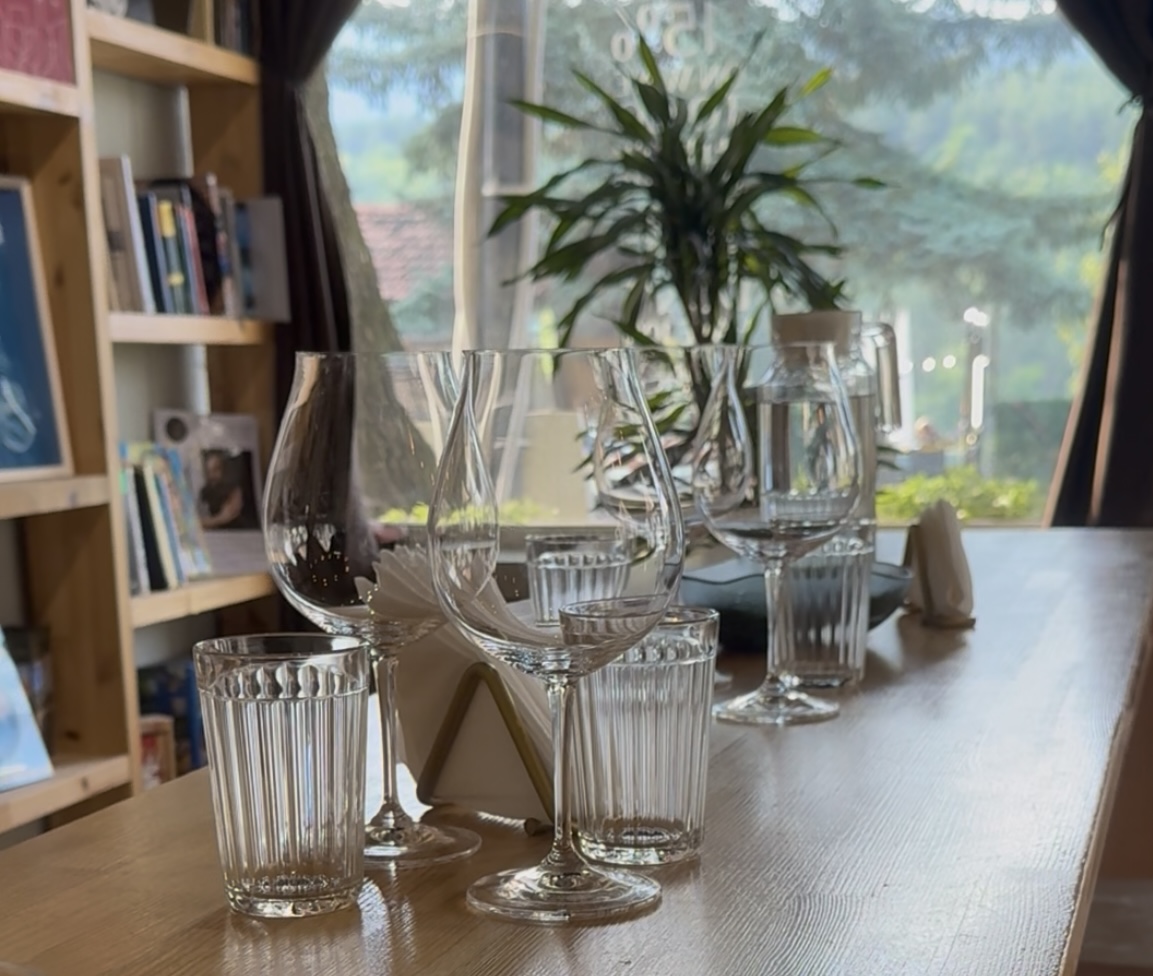
If your ideal night includes a glass of Armenian wine, a cheese plate to share and the possibility of staying longer than planned, start at The Kliver wine place.

Kliver feels less like a place where you simply “go for dinner” and more like a place where the evening gathers itself. You might arrive after a walk, take a seat for one glass, then discover that someone has opened another bottle, suddenly a live concert starts, and in one moment you understand that it is much later than you thought.

The focus is, naturally, wine: glass positions, foreign bottles and a special offer of express tasting where you will not only enjoy good Armenian wine, but also hear the history of it. Kliver also works well for people who do not want a formal tasting. Come after hiking, order a glass of red with a cheese plate, and let the evening do its job.

Hovaz Wine Rooms

Hovaz Wine Rooms is the place to choose when one glass feels a little too casual and you want to understand what is actually happening in it.

This is closer to a small tasting room than a standard bar: a place for trying wines slowly, comparing bottles and pairing them with good bread or small snacks. The point is not to perform expertise.

For visitors, Hovaz is a useful introduction to Armenian wine beyond the familiar supermarket labels. Ask about the producer, the grape, the region and whether there is something less obvious to try. A tasting here works especially well for couples, small groups and anyone who wants an evening plan with a little story behind it.

Dilijani Tun: a tasting that goes beyond the town

Dilijani Tun offers another route into Armenian wine: not just a bottle with dinner, but a more structured tasting experience. Its wine programme includes selections from Armenian producers, including wines connected with nearby Tavush and the wider Armenian wine map, alongside brandy tastings.

It is a good option for travellers who want an introduction without organising a full winery trip. You can try several wines in one sitting, learn a little about local styles and finally settle the important question: are you a crisp white person, a serious red person, or a person who came for wine and left emotionally attached to pomegranate wine?

Café #2: wine with a little city energy

It is more café-bar than solemn wine temple, which is probably for the best. Dilijan does not need anyone swirling a glass dramatically while explaining “notes of wet stone.” The town already has enough actual wet stone.

The menu gives you room to build the evening your own way: food first, wine second, a proper meal with friends or a casual stop before moving somewhere else. It is a useful place to remember when the group cannot agree on anything, which is most groups after 8 PM.

A good restaurant table: do not underestimate the simple option

Not every good glass of wine in Dilijan needs to come with a wine-bar label. Some of the nicest evenings happen at a restaurant table: warm food, local vegetables, grilled meat or fish, a bottle of Armenian red, and the comforting realization that nobody is in a hurry to replace your table with new guests.

When choosing wine with dinner, do not automatically order the safest international grape on the list. Armenia’s local varieties are worth a try. Areni is the obvious red starting point: usually fruity, earthy and easy to drink with food. For white wine, ask what Armenian bottles are available and whether the staff has a favourite. You may get a better answer than “the house white.”

For a slower night: buy a bottle and stay somewhere beautiful

Dilijan is one of the few places where taking a bottle back to your hotel, guesthouse balcony or forest-facing terrace can feel like a very legitimate evening plan.

Buy wine from a local supermarket or in Kliver (by the way, they have a 15% discount for bottles to take away) or ask your host for a recommendation. Add fruit, bread, cheese, something salty, and perhaps one person who knows how to open a bottle without injuring themselves. That is enough.

This option is especially good after a long day outside. The town becomes quiet early, the air cools down, and the forests around Dilijan make even an ordinary bottle feel slightly cinematic.

Dilijan after dark: what to do in the city after sunset

The biggest mistake a visitor can make in Dilijan is deciding that, once the sun goes down, there is nothing left to do.

It is an understandable mistake. Most itineraries treat Dilijan as a daytime destination: wake up, hike through the forest, drive to Haghartsin, stop at Lake Parz, walk along Sharambeyan Street, have dinner and leave. By 9 PM, the travel guide has effectively clocked off too.

But Dilijan does not shut down after dinner. It simply changes tempo. The trick is to know where to go.

For wine, tastings and an unhurried second act

The Kliver Wine Place is one of the most natural places to continue an evening after dinner. Come for Armenian and international wine by the glass, share cheese or snacks, and check the schedule before you go: tastings, winemaker evenings and live music regularly turn a quiet drink into a proper plan.

For something more structured, Hovaz Wine Rooms focuses on sparkling wine and tasting experiences, while Dilijani Tun offers bookable tastings of wine, sparkling wine, fruit vodka and brandy. These are best reserved in advance – Dilijan’s good evenings are often intimate precisely because they are not built for crowds.

For dinner that does not end at nine

Red Forest Restobar is an important new reason not to rush back to your hotel. Open until 2 AM, it fills the gap left by restaurants that close after the standard dinner service. It is the kind of place to choose when you want the table, conversation and drinks to last longer than the guidebook allows.

Cabinet is a more polished option for an earlier, food-led evening: contemporary takes on Armenian ingredients in a restored historic building. Haykanoush, inside the Tufenkian Old Dilijan complex, works well for Western Armenian dishes and Tavush specialities before continuing the night with chess, backgammon or another glass nearby.

For the latest night in town

If the evening has gained momentum, go to Bar No. 1. It can stay open until 4 AM when there are guests in the venue – a rare detail in a town where most places wind down much earlier.

That does not make Dilijan a party capital, and it should not try to be one. But it does mean you are no longer forced to end the night at 11 PM because there is nowhere left to sit.

For live music and cultural evenings

We have already mentioned The Kliver wine place for such a way, so if you are interested in music jams, concerts, film or gastronomical evenings, you can check their social media accounts for schedule. DiliJazz Hotel & Restaurant builds its programme around jazz evenings and changing performers. It is outside the compact centre, on the Haghartsin road, so treat it as a destination rather than a spontaneous stop.

Also keep an eye on programmes at RestArt Boutique Hotel, the Eduard Mirzoyan House of Composers and other local venues. Dilijan does not run cultural events every night, but a jazz set, chamber concert, exhibition or special dinner can be the best reason to stay for a second night. Check the calendar before booking your trip – one good event changes the whole rhythm of a weekend.

For a slow hotel night: spa, sauna, games

When the weather turns cold or wet, the strongest argument for staying overnight may be your hotel.

At DiliJazz, the heated indoor pool, jacuzzi and sauna are open into the evening, while the wood-fired forest sauna and heated outdoor barrel can be booked in advance. Dili Town Resort & Spa offers massage and sauna treatments, and Dilijan Resort & Spa combines its pool and sauna with billiards.

For a more low-key version of nightlife, several hotels also offer film nights, live music, fireplaces and games rooms. In Dilijan, a sauna followed by backgammon and Armenian wine is not a backup plan. It is a very convincing evening.

The reason to stay more nights

Do not try to fit everything into one night. On the first evening, choose a long dinner and wine. On the second, book a tasting. On the third, a spa session or a concert – and keep Bar No. 1 or Red Forest in reserve if you are not ready to call it a night.

Dilijan after dark is not loud. It is warmer, smaller and more personal. And once you know where to go, leaving after one night starts to feel like the real tourist mistake.

Beyond Sharambeyan: the streets that show you another Dilijan

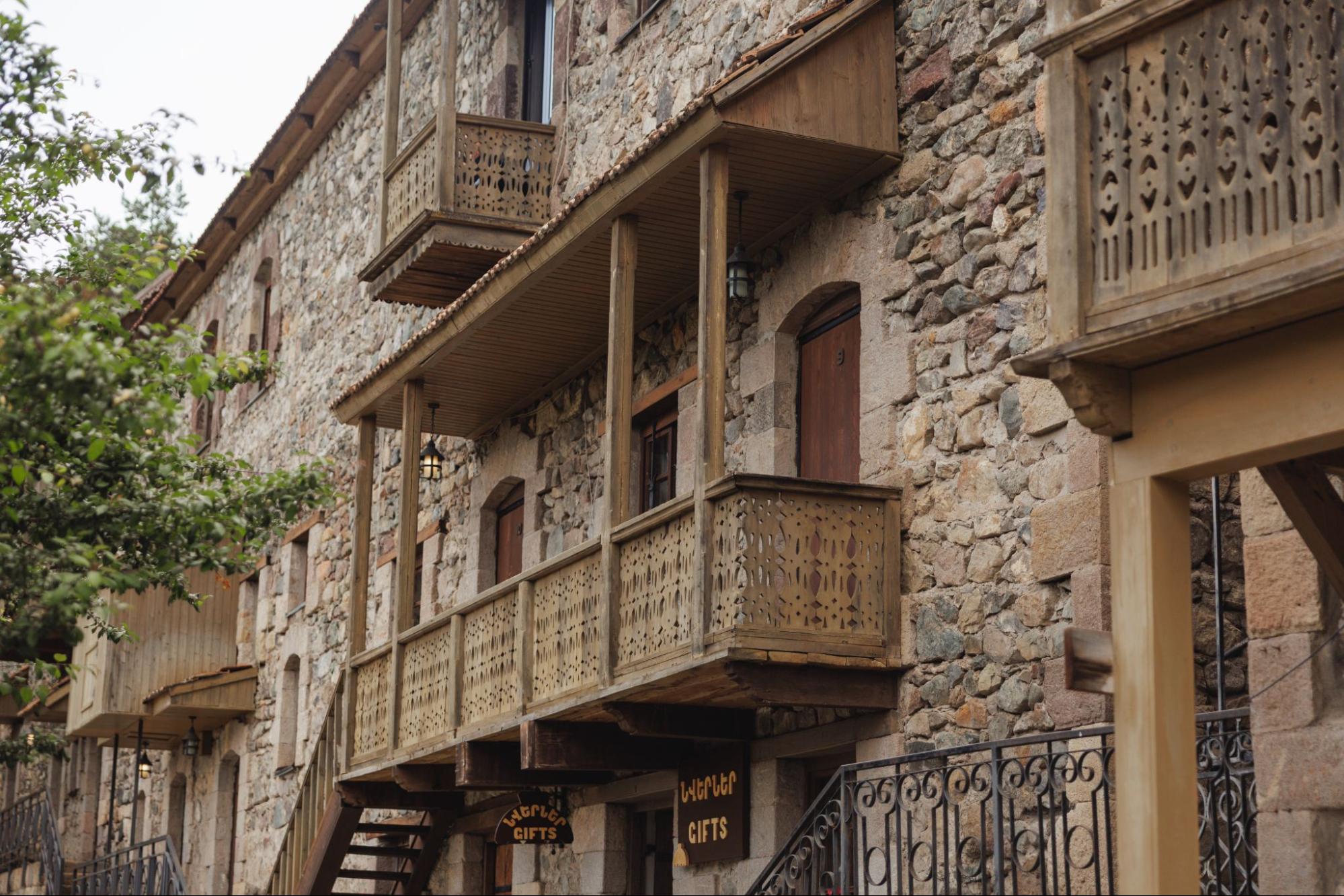
Most visitors to Dilijan walk the same street. It is easy to see why. Sharambeyan Street offers wooden balconies, stone walls, craft workshops and restaurant terraces – a compact, photogenic version of “old Dilijan”. The historical district preserves the town’s 19th-century architectural character, while its modern restoration began in 2004 under Tufenkian Heritage.

Sharambeyan is worth seeing. But if you stop there and leave with the impression that you have seen Dilijan, sorry to say – you haven’t.

Beyond it, wooden houses survive on residential streets, Molokan history hides in Papanino, Soviet modernism reshapes the centre, and an enormous former factory recalls the town’s industrial past. Workshops occupy old buildings, cafés face the lake, and the mountains keep appearing between rooftops.

So finish your coffee on Sharambeyan. Then turn off the postcard street and keep walking.

Myasnikyan Street: where the tourist town becomes a real one

Myasnikyan is a good place to begin because it does not immediately look like an attraction.

Cars pass, people run errands, cafés stand beside everyday businesses, and then an old wooden balcony appears above you. Traditional architecture survives here as part of the living town, not as one carefully restored historical set.

Examples of old Dilijan houses can still be found on Myasnikyan, Kalinin and Lermontov streets. Look for red-tiled roofs, open verandas, slender wooden columns and carved details – an unusually timber-rich architectural language for a country better known for stone.

At No. 28, the Dilijan Museum of Regional Studies and Art Gallery brings together archaeology, ethnography, painting and applied art. Its collection includes more than a thousand archaeological objects, according to the official Armenian museum platform.

Nearby, Buduart connects this heritage with contemporary craft. Artists Arman Badeyan and Margarita Malkhasyan established their studio in a 19th-century house and work with painting, textiles, linocut and copper jewellery. Visitors can also join workshops, including jewellery-making experiences.

For lunch, Tava and Kchuch are both nearby. For photographs, do not search for one perfect facade. Myasnikyan works better as a sequence: a carved window, an old gate, laundry behind a veranda and forest appearing between houses.

Kalinin Street and Papanino: Dilijan before it became one town

Continue away from the historic centre and another layer appears.

Before becoming part of Dilijan, Papanino developed from a 19th-century Russian religious settlement. Local historical sources trace the establishment of Papanino and nearby Golovino to the 1840s. The area’s Molokan history still survives in its domestic architecture.

This changes the way you see the neighbourhood. Its wooden houses are not simply fragments of “Old Dilijan” scattered beyond Sharambeyan. They belong to a more complex story of settlement, migration and different communities living beside one another.

Kalinin Street provides a natural route through this part of town. Restored houses alternate with newer buildings and older structures visibly carrying their age. Papanino House, with its wooden balconies, restaurants and bakeries, makes an easy place to pause.

Lermontov Street: look for fragments, not landmarks

Lermontov Street is worth walking precisely because there may be no single landmark somebody will insist you must see.

This street is also locally known as “qarami qucha”. Some houses have been restored, others are deteriorating. That unevenness reveals more about the city than another polished historical facade.

Look at the depth of the verandas, the carved timber beneath the roofs and the combination of stone at ground level with wood above it. Then notice how the forest constantly enters the composition.

In Dilijan, streets rarely give you only the street. Houses drop away, roofs overlap, mist settles over the slopes, and an ordinary gap between buildings suddenly becomes a panorama.

You do not always need an observation deck to find a view.

Maksim Gorky Street: coffee, the lake and a changing Dilijan

Around the city park and artificial lake, Dilijan becomes more open and social.

Café #2 is one of the town’s best-known everyday meeting points, attracting families, students, visitors and locals stopping for coffee. The park and lake are less a formal attraction than a piece of daily urban life.

Nearby, Dilijan Space explores the town through exhibitions and cultural programmes focused on its architecture, resort history and industrial past. The Dilijan Development Foundation describes it as a centre for research, permanent and temporary exhibitions.

It is a useful stop after walking through the older neighbourhoods. By now, you have already encountered the questions such projects examine: What should be restored? What can be reused? How can Dilijan develop without becoming a historical theme park?

This area also changes the photographic scale. Instead of close-ups of carved balconies, you can frame the lake, street life and new urban spaces against the forested slopes.

The Soviet centre: from carved wood to modernism

Do not return directly to Sharambeyan. Stay in the centre and look for the Dilijan built during the second half of the 20th century.

In 1958, Dilijan received the status of a resort city of republican importance. Active urban development followed. A new administrative centre brought together a Palace of Culture, government buildings, a communications centre, cinema, library and department store, many designed in the modernist language of the period.

The visual change is abrupt. Timber carvings give way to horizontal lines, large stone volumes and buildings created for collective urban life.

Some no longer serve their original purpose and others need restoration. That uncertainty is what makes them interesting. If Sharambeyan represents the heritage Dilijan has already chosen to preserve, the Soviet centre shows a heritage whose future is still being negotiated.

For photographs, use the contrast: strict modernist geometry against irregular green mountains, weathered stone against mist, and monumental civic buildings inside a town that still feels small.

Shaumyan and the road toward Impulse: industrial Dilijan

For a longer walk, continue along the Myasnikyan–Shaumyan axis. Here the familiar resort town begins to change scale.

Проект « Impulse instrument-making factory opened in 1962. At its height, the complex employed more than 3,700 people and produced communications equipment for the Soviet Union. It stopped operating in 2001.

That number alone changes the image of Dilijan. A factory employing thousands was not a curious structure on the outskirts, it shaped jobs, families, housing and everyday routines. Yet this industrial identity is almost invisible if your visit begins and ends with wooden balconies.

This may be the least postcard-like end to a Dilijan walk, which makes it a very good one.

The best Dilijan walk has no final stop

There is no need to cover every street in one afternoon. Turning this walk into another sightseeing checklist would miss the point.

Start on Sharambeyan because it deserves attention. Then leave it. Follow Myasnikyan until something makes you turn. Take Kalinin farther than planned. Look at the old houses in Papanino, wander up a residential street for the mountain view, stop for coffee near the lake and notice the Soviet buildings before deciding whether they are beautiful.

Dilijan has been several different towns at once: a craft town, a Molokan settlement, a mountain resort, a Soviet cultural centre and an industrial community.

Most visitors come looking for one famous street.

The easiest way to see Dilijan is to walk off it.

Beyond the usual route: 5 places that reveal a different Dilijan

Dilijan is often introduced through the same familiar landmarks: a walk along Old Dilijan (Sharambeyan Street), the forests around Lake Parz, and the medieval monasteries of Haghartsin and Goshavank. They are beautiful places and well worth visiting, especially on a first trip. But they are only one layer of a town whose history stretches far beyond its best-known attractions.

This guide brings together five lesser-known places that offer a more authentic perspective on Dilijan. Some can be explored during a leisurely walk through town, while others require a short hike into Dilijan National Park. Together, they reveal a side of Dilijan that rewards curiosity, slower travel and a willingness to step beyond the usual route.

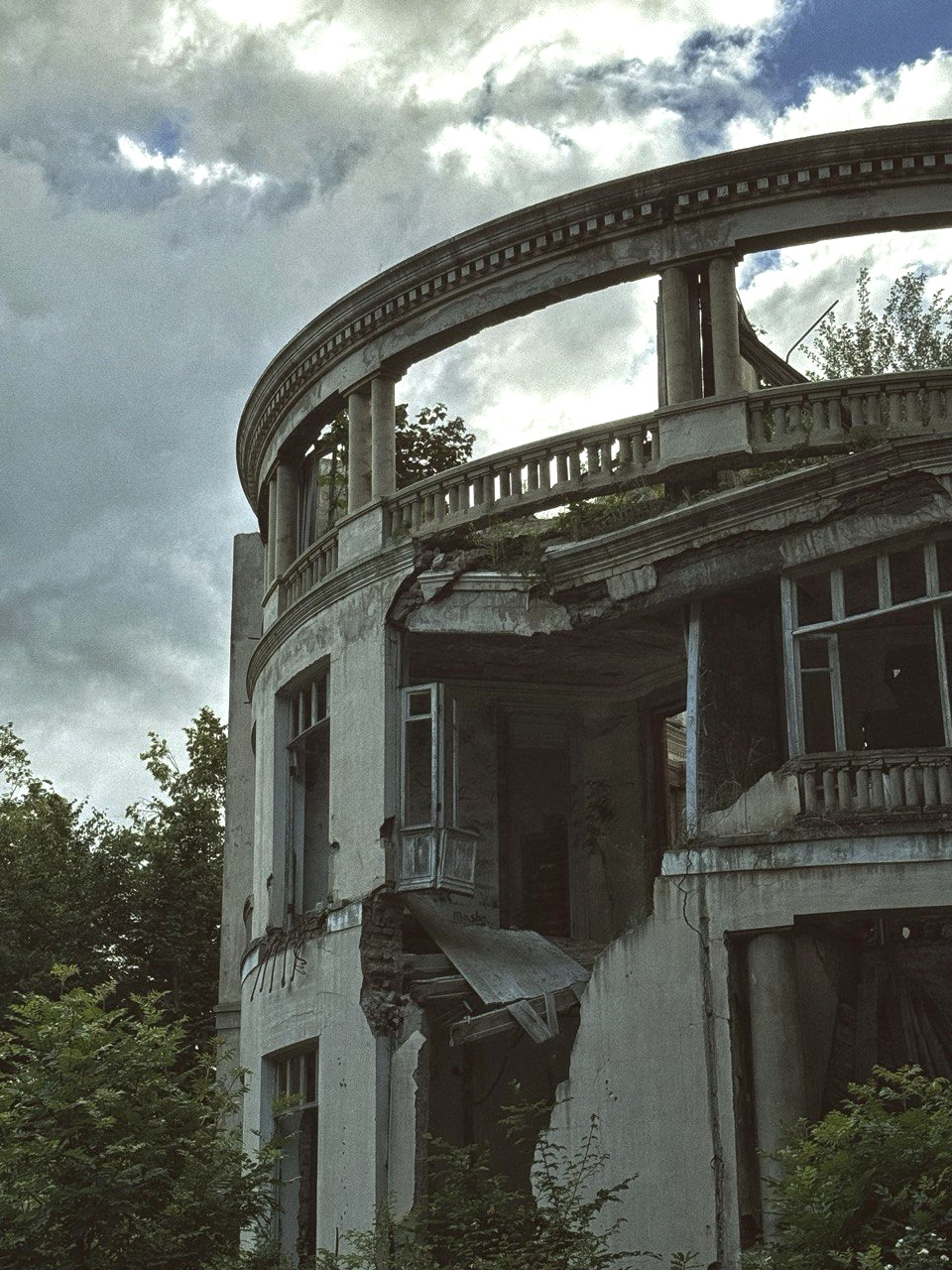
1. Agasi Khandjian villa – a forgotten modernist gem hidden in Dilijan’s forests

Built in 1936, the villa belonged to Agasi Khandjian, the First Secretary of the Communist Party of Armenia from 1930 to 1936. Like many members of the Soviet elite of that era, Khandjian chose Dilijan as the location for his summer residence. Even at that time, the town was already considered one of Armenia’s most important resort destinations, thanks to its mild climate, dense forests, and fresh mountain air.

The building’s most distinctive feature is its unusual circular design. For the architecture of the 1930s, a cylindrical layout was a rather rare solution. The villa combined functionality, panoramic views of the surrounding landscape, and elements of early Armenian modernism. Its large windows and hillside location created the impression that the building naturally followed the shape of the mountain itself.

The history of the villa is closely connected to Khandjian’s own tragic fate. In the same year the building was completed, the political figure died in Yerevan under circumstances that remain the subject of historical debate to this day. After his death, the villa gradually lost its original purpose and eventually fell into abandonment.

Practical note: The best time to visit is in the morning or evening, when soft light highlights the building’s silhouette and the surrounding forest. The villa is currently abandoned, so it should be approached carefully and respectfully.

2. Shaumyan Street and Impulse: Dilijan’s industrial afterimage

Dilijan is widely known as a resort. Yet in 1962 the Impulse radio-electronics factory opened on its eastern edge. At its height, it employed several thousand people and produced communication-system components. A whole district grew around it: engineers’ housing, a school, cultural and sports facilities. A walk along Shaumyan Street is therefore not urbex, it is a way to see another biography of the town. Dilijan did not only host visitors – it made things, studied and welcomed specialists from across the Soviet Union.

The Himalayan cedar alley is especially striking: unexpectedly lush and almost cinematic against the surrounding forest. It softens the industrial edge of town in a curious, calm way. The former factory matters for its scale and silhouette, not as a site to enter: the grounds are guarded and some structures are unsafe.

Practical note: get off at the Fabrika Impuls bus stop on Shaumyan Street and view the district only from public space. Do not cross fences or enter abandoned buildings.

3. Matosavank: a monastery that does not pretend to be new

Matosavank is a small thirteenth-century monastery in the forest of Dilijan National Park. Unlike carefully restored complexes, nothing here separates history from the woodland: dark stone gathers moss, the vaults hold the half-light, and the ruins of the narthex and book repository do not disguise the passage of time. This is exactly why Matosavank can feel more powerful than a ceremonial monastery. You do not drive up for five minutes; you walk to it.

The trail is often combined with nearby Jukhtak. The two sites have distinct moods: Jukhtak reads as a small, cared-for church, while Matosavank feels like a medieval fragment found in the trees. It is a short route, but not a city stroll. It can be slippery after rain, so download the navigation route in advance.

Practical note: How to visit: the short Matosavank-Jukhtak loop takes roughly 1.5-2 hours. Start from Abovyan Street or walk from the tourist information centre. Wear closed shoes with a grippy sole.

4.The hidden waterfall beyond Haghartsin

Haghartsin has long been a must-see. Yet most visitors turn back at the car park and miss the path that continues into the forest. Beyond the monastery, the Hidden Waterfall Trail leads to a multi-level cascade: wet stones, ferns, a stream and dense beech woodland replace the monastery courtyard. It is a rare chance to extend a popular stop until it feels as though the tourist part of the day has ended and a private one has begun.

The waterfall’s magic lies less in its size than in how completely it is concealed. It appears only at the end of the trail and changes with the seasons. The flow is fuller in spring and after rain, gentler in summer and sometimes modest in a dry spell. The point is not to race to the cascade, but to make a slow transition from architecture to forest.

Practical note: How to visit: the waterfall is about 1.6 km from Haghartsin one way, or 3.2 km return. Allow 1.5-2 hours, bring water and avoid the trail at dusk or after a heavy downpour.

5. Aghavnavank and the yew grove: a different silence in the national park

On the eastern side of Dilijan National Park, near Aghavnavank village, the forest changes character altogether. An easy riverside path leads to the twelfth-thirteenth-century Anapat-Astvatsatsin church, surrounded by relic yew trees. Some are around four hundred years old. Compared with Dilijan’s familiar beech forests, the yew grove feels denser, cooler and almost motionless.

Aghavnavank is commonly translated as the “temple of doves”. Pale church stone, green forest shade and the absence of tourist infrastructure make the place deeply intimate. On the way out of the village, look for the old twelfth-thirteenth-century bridge beside the newer one. This is not an hour-long detour between breakfast and lunch; it is a small journey of its own, which is exactly why it stays quiet.

Practical note: first drive to Aghavnavank village, then follow the signposted riverside trail for around 30 minutes. Allow at least half a day from Dilijan, check the weather and download an offline map.

How to explore Dilijan with care

The places on this list are unlikely to become the postcards that define Dilijan – and perhaps that is exactly their greatest value. They invite you to slow down, wander a little further and notice the quieter stories that give the town its character.

Beyond the famous monasteries and viewpoints, Dilijan is a place of layered histories, living neighbourhoods and forests that still reward curiosity. If you leave with the feeling that you have discovered a version of the town that cannot be found on every itinerary, then you have experienced one of the best things Dilijan has to offer.

Quick choice: which place fits your plan?

Place Best for Time needed
Khandjian Villa Architecture 30 min
Matosavank Hiking + history 2 часов
Hidden Waterfall Nature 2 часов
Агавнаванк Slow travel Half day